How to Cite
Abstract
Many critical readings of the Anglo-Saxon poem Beowulf emphasize its dualistic vision, its several binomials and oppositions. In this paper, I shall argue that dichotomies such as those of light and darkness, of human and nonhuman, of human society and anarchic nature, and of pagan and Christian beliefs are both strengthened and reversed by the representation of light and fire, which acts as a counteracting theme that negates such binomials and provides a bridge between them. Firstly, I shall examine the various dichotomous readings hitherto offered by critics such as Fred C. Robinson and Bruce Mitchell. Secondly, I shall specifically analyse in detail the presence of light in the various descriptions of dawns, in the characterization of Grendel’s eyes, and shall then link it to the representation of fire given in the poem. My argument shall therefore establish that there need not be a strictly demarcated vision of the poem, but opposite elements coexist with equal representation.
Keywords: Beowulf; fire; light; dichotomies; Grendel
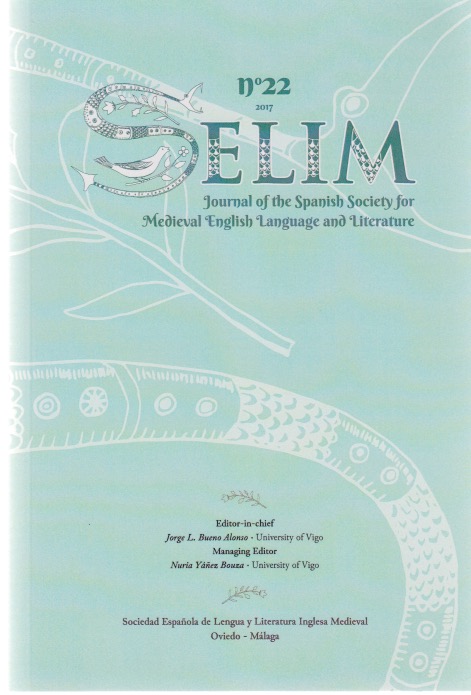
SELIM. Journal of the Spanish Society for Medieval English Language and Literature is an Open Access Journal licensed under a Creative Commons Attribution-NonCommercial-NoDerivatives 4.0 International License.
The Publisher (Ediuno) holds the copyright of the work published in the journal, favouring and granting its reuse under the license mentioned above.
© Ediuno. Ediciones de la Universidad de Oviedo
Self-Archive of the post-print editorial version of the article is granted to authors in personal and/or institutional webpages webpages; a link to the journal's OJS website and full citation must be provided. Selim and its url https://reunido.uniovi.es/index.php/SELIM are the sole authorized sources to correctly reference the editor's version in all article citations.